
The idea of “religion” as we know it isn’t a timeless truth—it’s a product of history, politics, and the human urge to categorize. Long before the word “religion” became a label for belief systems, traditions like Islam or Chrisianity existed as woven threads in the fabric of daily life, inseparable from culture, law, and identity. Cicero’s ancient notion of religio—rooted in ritual and duty—bears little resemblance to today’s focus on dogma or “correct belief.” This shift wasn’t accidental. Colonial thinkers like Grotius twisted the term to fit their hierarchies, branding non-European traditions as “false religions” to justify conquest and conversion. The legacy of this distortion lingers, especially in how Islam is often misunderstood through stereotypes rather than a diverse, evolving tradition shaped by centuries of art, philosophy, and local customs.
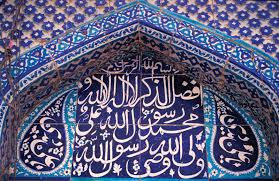
One faith being a true religion, the statement itself, is an inherently polarizing sentence. Yet the Qur’an itself resists this narrowness, stating plainly, “There is no compulsion in religion”—a radical embrace of diversity that complicates the myth of inherent religious rivalry. To study Islam (or any tradition) fairly, we need to move beyond comparing static “truths” and instead explore how beliefs breathe within real communities. What does Islam look like in various parts of the world? Could a Chinese Muslim pray with a Russian sheik? What became of the idols once thought to be integral to once spiritual, now Muslim communities in Africa? These questions reject rigid labels and honor the messy, creative ways humans adapt faith to their worlds.
